How We Talk About Food Matters: Supporting Healthy Habits Without Pressure
Conversations about food start earlier than we think.
Kids hear how we talk about snacks, meals, treats, and energy, especially this time of year. Those conversations shape how they feel about food long before they can explain it themselves.
At Runner2Runner, we’re not nutrition experts. We don’t give meal plans or food rules. What we do care deeply about is how kids experience movement, confidence, and their relationship with their bodies, and food is part of that picture.
This post isn’t about what kids should eat. It’s about how we talk about food and how that language can support healthy habits without pressure.
A Quick Disclaimer (Because It Matters)
We are not registered dietitians or medical professionals. This post is about mindset, language, and habits, not nutrition advice or dietary recommendations. If you have specific questions about nutrition, allergies, or health needs, we always recommend talking with a qualified professional.
Why Language Around Food Matters
Kids are constantly learning from us, even when we don’t realize it.
When food is labeled as:
“Good” or “bad”
Something to earn
Something to feel guilty about
Kids can start to connect eating with behavior, worth, or emotions in ways that aren’t helpful long term.
Instead, neutral, supportive language helps kids:
Trust their bodies
Understand hunger and fullness
Feel confident around food
Avoid unnecessary pressure
Food Is Fuel: Not a Reward or Punishment
One common habit many of us grew up with is using food as a reward:
“If you behave, you can have dessert.”
“You earned a treat.”
While often well-intentioned, this can send mixed messages:
Some foods become “extra special”
Eating becomes tied to behavior
Kids may ignore hunger cues
A helpful reframe is talking about food as fuel.
Fuel helps our bodies:
Move
Focus
Play
Recover
Grow
That doesn’t mean food can’t be enjoyable, it absolutely can. It just means enjoyment doesn’t need to come with guilt, earning, or pressure.
What to Say Instead (Simple Shifts)
Here are a few gentle language swaps that keep things supportive:
Instead of:
❌ “That’s a bad food.”
Try: ✅ “Different foods help our bodies in different ways.”
Instead of:
❌ “You have to finish your plate.”
Try: ✅ “Check in with your body: are you still hungry?”
Instead of:
❌ “You earned a treat.”
Try: ✅ “This is part of our meal today.”
Small changes in language can make a big difference.
Helping Kids Connect Food, Energy, and Movement
Because movement is a big part of what we do at Runner2Runner, we like to help kids notice how their bodies feel.
You can encourage awareness by asking:
“How did your body feel during practice today?”
“Did you feel energized, tired, or somewhere in between?”
“What helps you feel ready to move?”
These questions build curiosity, not rules or pressure. Healthy habits don’t come from strict rules or constant monitoring.
They grow from:
Consistency
Modeling
Trust
Open conversation
Kids learn most by watching how adults talk about food, bodies, and movement. When we stay calm and neutral, kids are more likely to do the same.
A Gentle Reminder for Parents and Coaches
You don’t need to get it perfect.
You don’t need:
Special language
Nutrition charts
Strict systems
You just need to keep the conversation kind, open, and pressure-free.
The Runner2Runner Approach
Movement builds confidence
Habits grow over time
Kids thrive when pressure is removed
A Simple Tool to Keep the Conversation Going
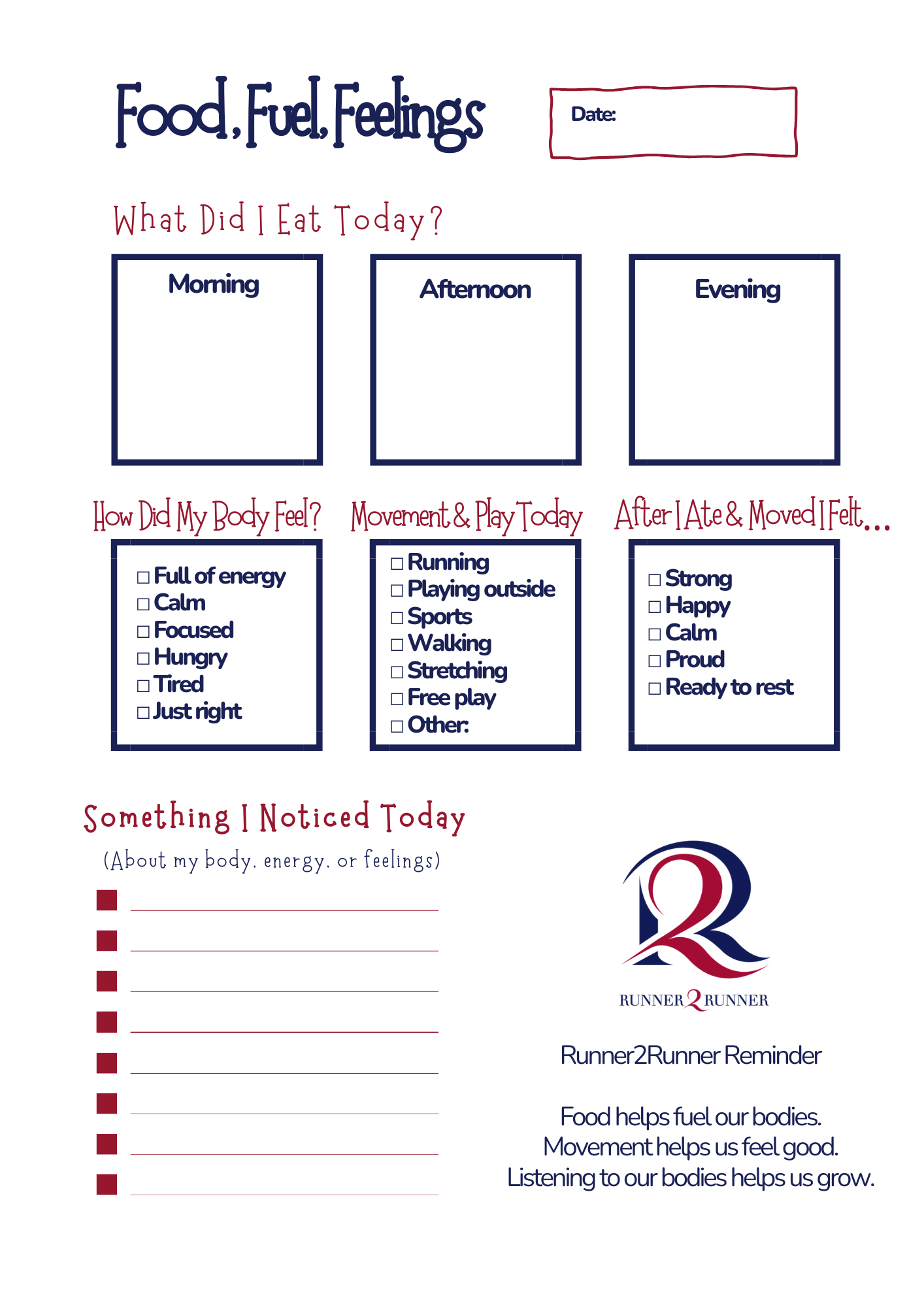
If you’re looking for an easy, kid-friendly way to continue these conversations at home, we created a one-page printable called Food, Fuel & Feelings.
This simple journal helps kids reflect on:
What they ate during the day
How they moved their bodies
How they felt before and after
There are no rules, no tracking, and no “right” or “wrong” foods, just space for kids to notice patterns, build body awareness, and practice listening to themselves.
👉 Download the Food, Fuel & Feelings printable here
Food is part of that journey, not as a rulebook, but as a conversation.