Screen Time vs. Play Time: Finding a Healthy Balance Without Guilt
Winter months bring cozy days, busy schedules, and more time indoors, which often means more screens. Between school, homework, and limited daylight, it’s easy for tablets, TVs, and video games to become the go-to activity for kids.
And while screens can absolutely be part of a balanced childhood, many families feel stuck between wanting to limit screen time and not wanting to constantly battle their kids about it.
Here’s the good news: you don’t need strict rules, timers, or guilt to help kids move more. You just need opportunities for play.
Movement should feel like something kids want to do, not something they’re forced into.
Screens Aren’t the Enemy — But Kids Still Need to Move
Screens are everywhere. They’re part of school, entertainment, and even social connection. The goal isn’t to eliminate them — it’s to make sure they don’t replace the things kids need most: movement, creativity, and connection.
When kids move, they’re not just burning energy. They’re:
Regulating emotions
Building confidence
Improving focus
Developing coordination
Learning how their bodies work
Especially during the winter months, when outdoor play is limited, movement becomes even more important for helping kids feel calm, focused, and happy.
Why Play Matters More Than Ever in Winter
Short days, cold weather, and packed schedules mean kids often have fewer chances to move freely. That can lead to more restlessness, bigger emotions, and yes more screen time battles.
Instead of thinking, “We need less screen time,” try shifting to: “We need more chances to play.”
A few minutes of movement can completely change a child’s mood, focus, and energy level, even if they’re still going to enjoy their favorite show later.
Simple Ways to Balance Screens and Play
You don’t need a perfect plan. Small changes go a long way:
Invite movement before screens (“Let’s play for 10 minutes first.”)
Turn movement into a game instead of a chore
Let kids choose how they want to move
Build short play breaks into the day
Use indoor space creatively: hallways, living rooms, and garages all work
The goal isn’t to take something away, it’s to add something better.
To make this easy, we created a free printable you can use all winter long:
“Winter Play Breaks: A Simple Movement Chart for Kids”
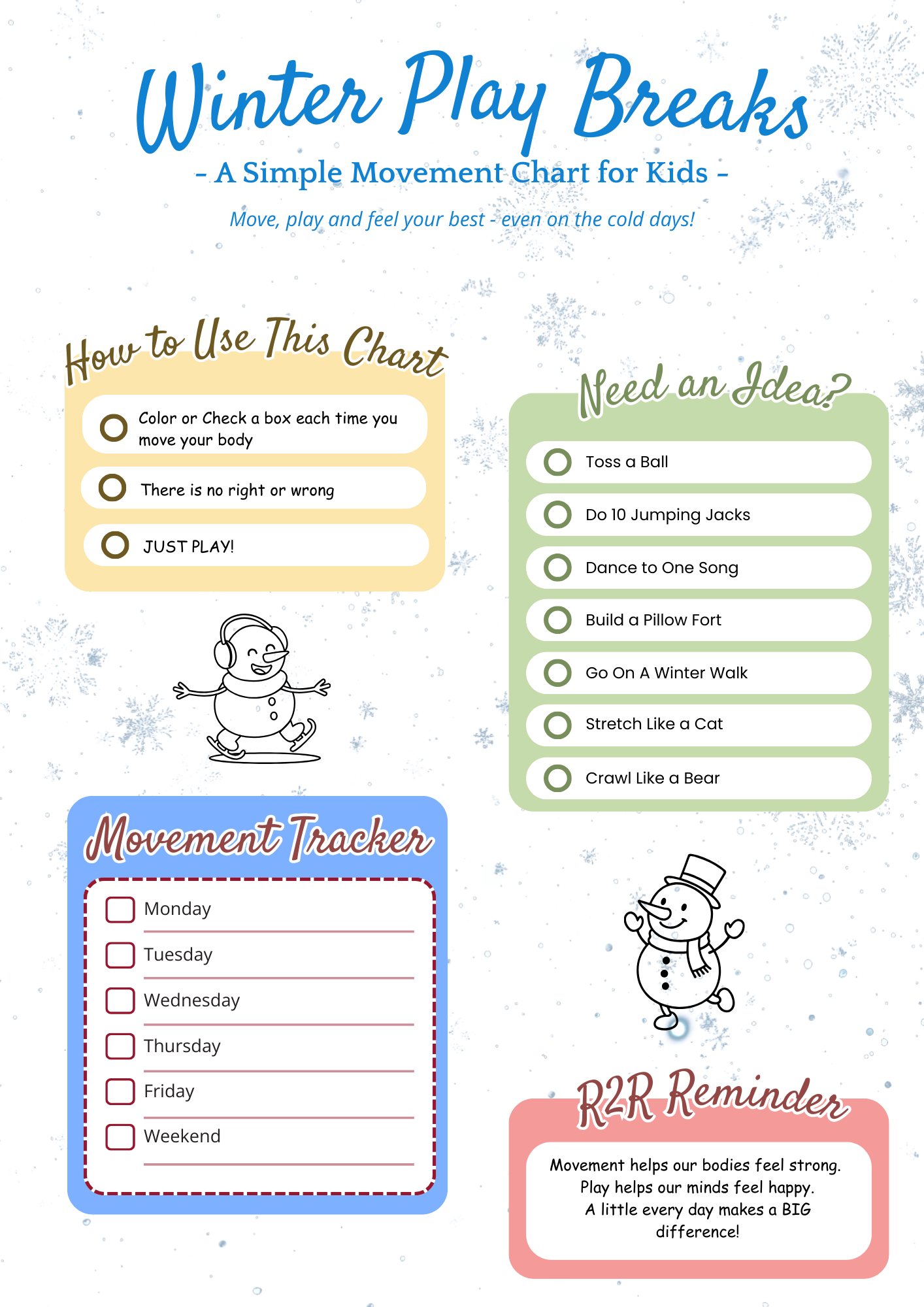
This printable gives kids a visual reminder that play is part of their day!
👉 Download your free Winter Play Breaks chart here:
A Different Way to Look at Screen Time
Screens don’t have to disappear for kids to thrive. When we give children regular chances to move, play, and explore, screens naturally fall into a healthier balance.
No guilt.
No battles.
Just more movement, more smiles, and more confidence.