Fun First: Why Play-Based Movement is the Key to Lifelong Youth Running
When you picture a running routine, what comes to mind? Lap counters? Stopwatches? Structured interval workouts?
For adult runners training for a half-marathon or 10K, those metrics serve a purpose. But when it comes to children, approaching running through the lens of strict metrics, pacing, and rigid workouts is often the fastest track to physical burnout and loss of interest.
At Runner2Runner, our mission is grounded in a simple, guiding philosophy: Fun First.
We believe that sports and movement should build confidence, promote joy, and establish a healthy foundation for lifelong movement. When children learn to associate running with play, camaraderie, and personal progress, they aren’t just learning a sport, they are building health habits that will support them for decades to come.
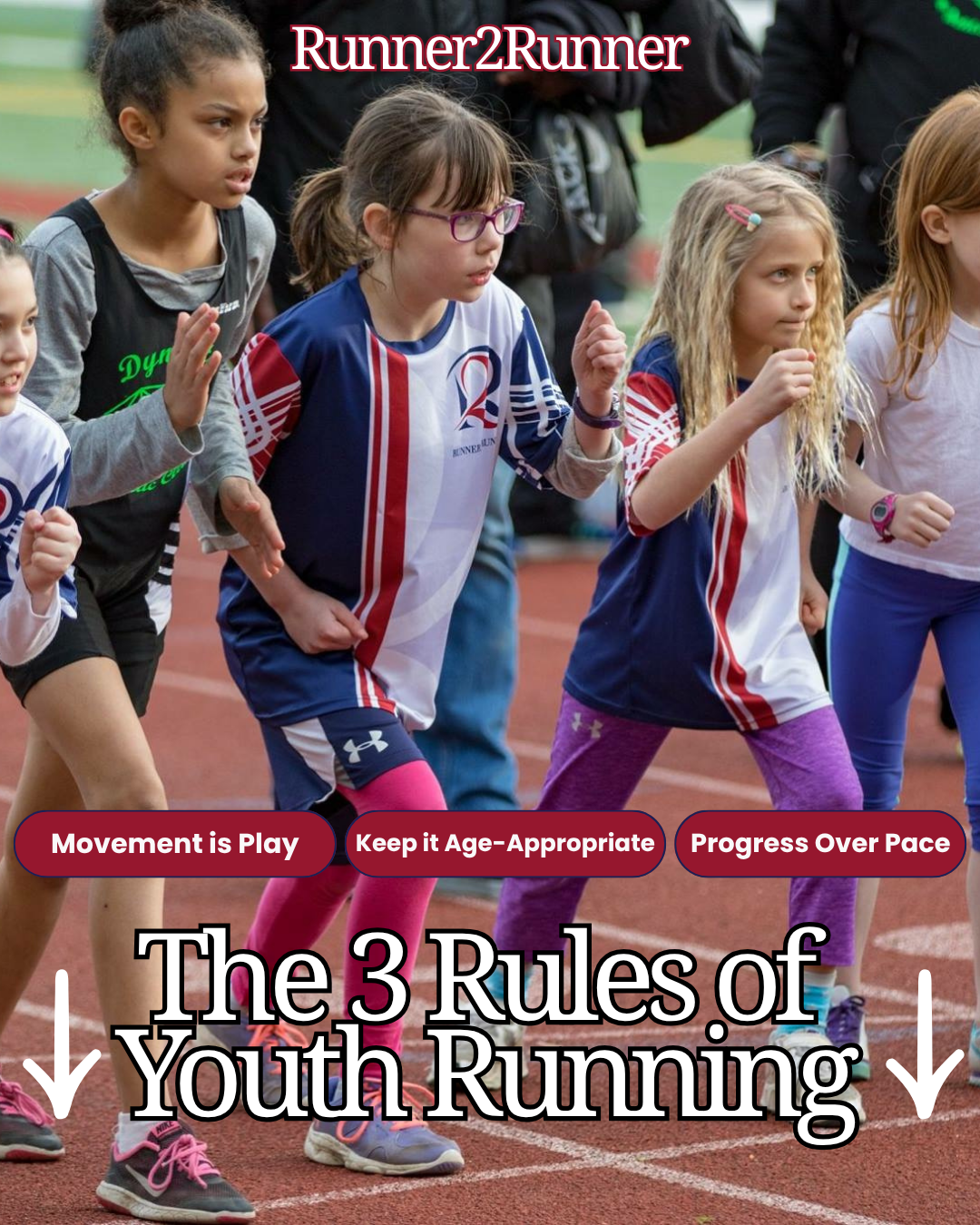
The 3 Core Rules of Youth Running
Whether your child is taking part in a youth running club, preparing for a local family fun run, or simply running around the backyard, keeping movement age-appropriate and joyful is essential. Here are three core principles every parent and coach can use to support young runners:
1. Movement is Play (Games Before Grids)
Children learn physical literacy, balance, agility, coordination, and endurance, naturally through play. Long, repetitive laps on a track can quickly feel like a chore. On the other hand, games like Tag, Red Light Green Light, or agility relays teach sprint mechanics, pacing, and sudden direction changes while keeping kids completely engaged.
When you make running a game, kids build aerobic endurance without even realizing they're working hard.
2. Focus on Progress, Not Pace
A stopwatch doesn't measure a child’s heart, effort, or personal growth. Placing too much emphasis on race times or comparing one child's speed to another can create unnecessary anxiety.
Instead, focus on celebrating small, personal wins:
"I loved how high your energy was today!"
"You kept going even when it felt tough!"
"Look at how much easier that warm-up was for you this week compared to last!"
When children feel supported rather than evaluated, their confidence naturally grows.
3. Keep It Age-Appropriate
Young bodies are continually growing and adapting. Pushing high mileage or intense conditioning too early can lead to overuse injuries or mental exhaustion.
A well-rounded youth running approach includes:
Dynamic Warm-Ups: High knees, butt kicks, and skipping to prime muscles and joints.
Cross-Training Through Play: Cycling, soccer, swimming, and climbing to build multi-directional strength.
Adequate Rest & Recovery: Prioritizing sleep, good hydration, and rest days so growing bodies stay healthy.
How Parents Can Support at Home
You don’t need specialized coaching experience or expensive athletic gear to encourage your kids to move. Here are three simple ways to foster a active environment at home:
Lead with Active Family Play: Set aside 15 minutes after dinner for a quick game of backyard tag, a balloon relay, or a family walk/jog around the neighborhood.
Normalize Rest: Teach kids that listening to their bodies and taking rest days is just as important as active days.
Keep Gear Simple: A comfortable pair of supportive sneakers, a water bottle, and weather-appropriate clothing are all young runners need to get started.