What Does "Age-Appropriate" Youth Running Actually Mean?
In youth athletics, "more" is often mistaken for "better." Parents and coaches naturally want to help children build stamina, improve fitness, and excel in sports. However, when adult training philosophies are imposed onto growing bodies, the result is frequently burnout, overuse injuries, or a loss of interest in sports altogether.
At Runner2Runner, our core philosophy is simple: Fun First.
We believe physical activity should meet children where they are developmentally. Understanding what "age-appropriate" running means allows parents and coaches to support healthy growth, build athletic confidence, and foster a lifelong love for movement.
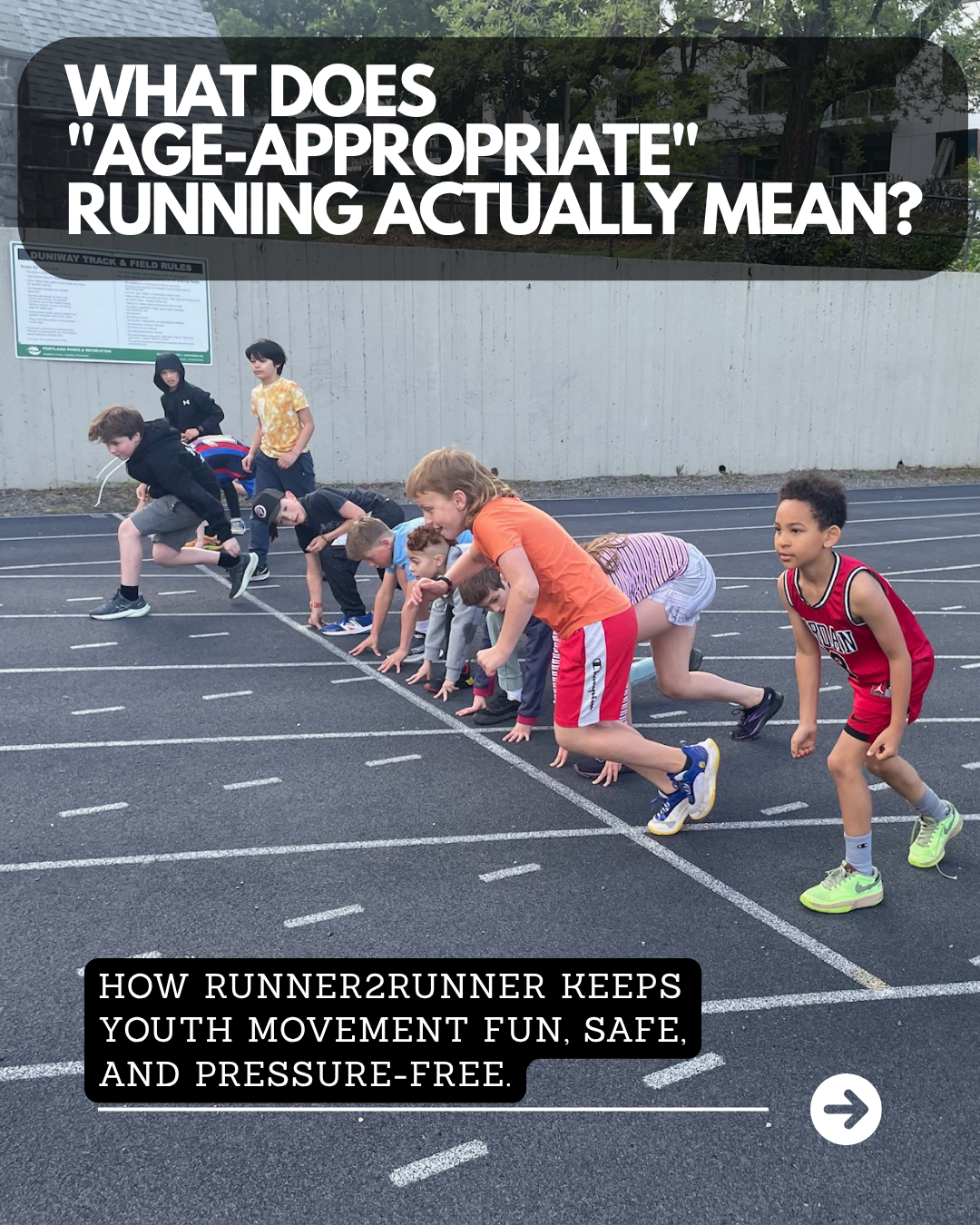
The Core Principle: Meeting Kids Where They Are
Children are not mini-adults. Their bones are still growing, their central nervous systems are developing, and their emotional relationship with exercise is being shaped every day.
When running is structured around play, variety, and positive reinforcement, children naturally build aerobic fitness, bone density, and coordination—without the psychological weight of performance pressure.
Here is a breakdown of how movement and running evolve across key developmental stages.
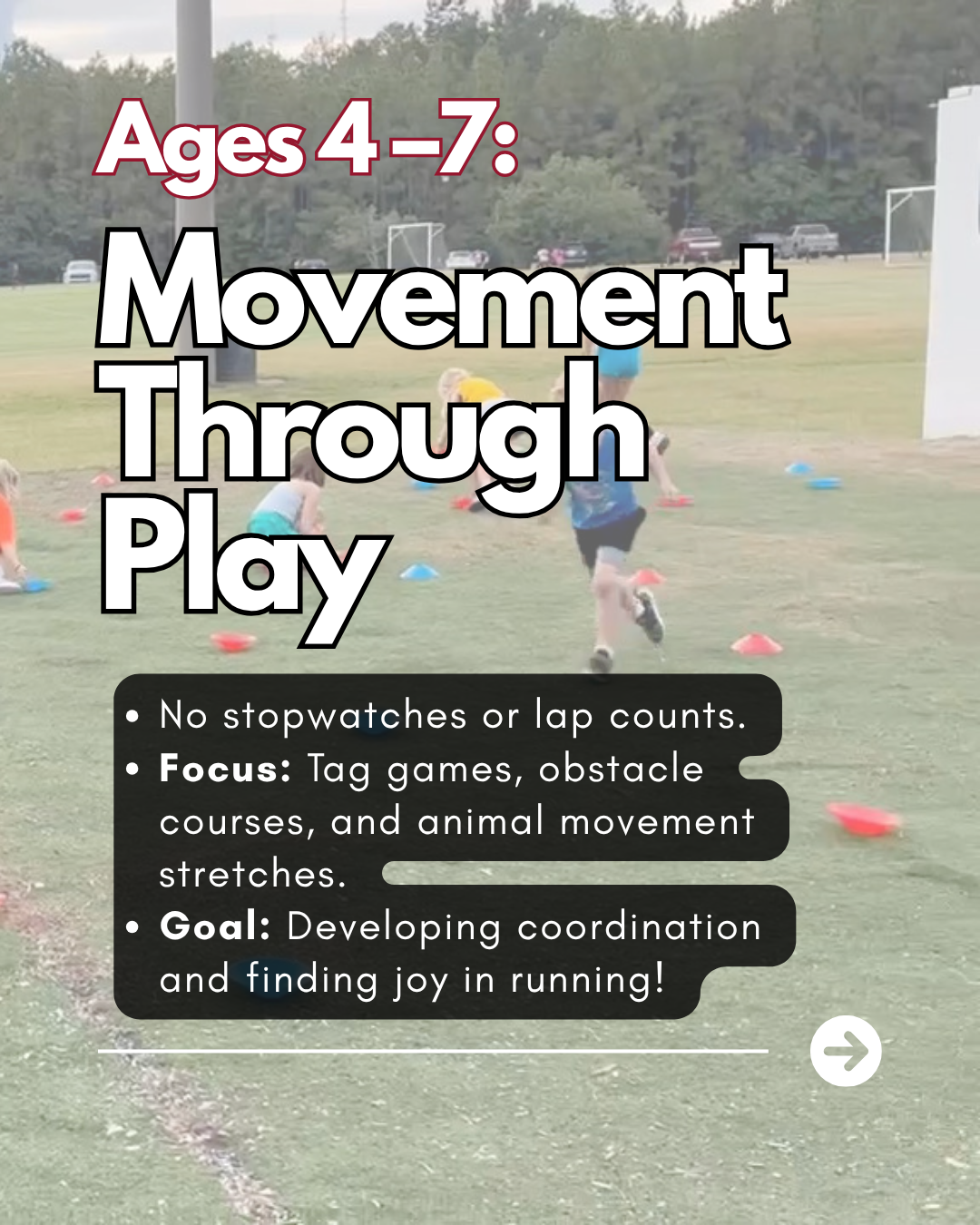
1. Ages 4–7: Pure Play & Unstructured Exploration
At this foundational stage, running should never feel like a workout or structured training session. Young children learn through imaginative play and spontaneous bursts of movement.
What it looks like: Tag games, freeze games, obstacle courses, and animal-movement stretches (like jumping like frogs or standing tall like giraffes).
What to avoid: Stopwatches, lap counts, formal track intervals, or measured distance goals.
The Goal: Developing fundamental motor skills, body awareness, and spatial control, while associating physical activity with pure joy.
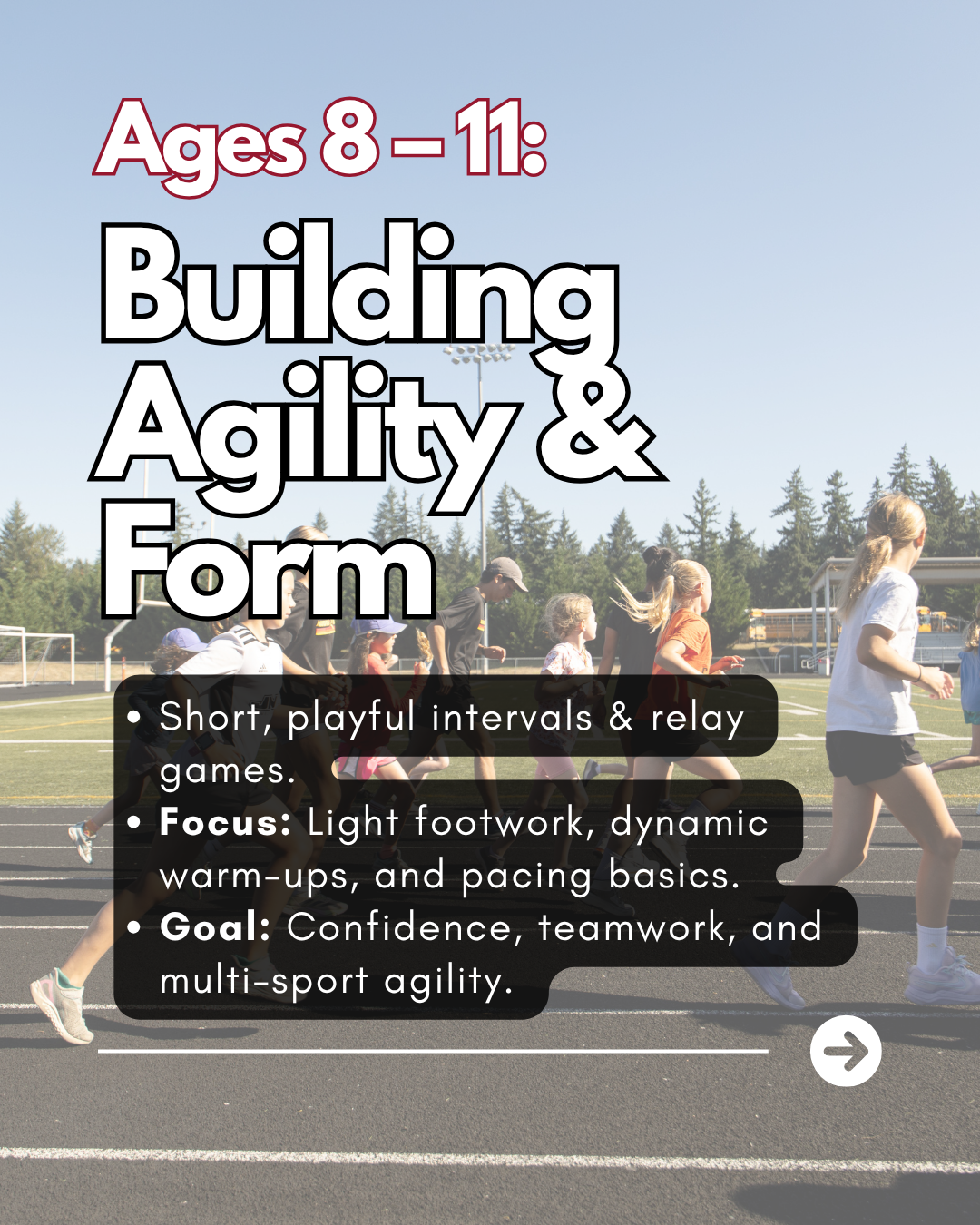
2. Ages 8–11: Skill Building & Multidirectional Agility
As kids enter elementary and middle school, their coordination and attention spans grow. They benefit from learning basic mechanics and athletic movement patterns through structured play.
What it looks like: Short relay races, shuttle runs, dynamic warm-ups, and agility drills using cones or chalk. Form cues are simple and positive ("Eyes up, chest tall, light feet").
What to avoid: Long, repetitive straight-line running or high-mileage expectations.
The Goal: Building multi-sport agility, ankle stability, rhythm, and teamwork while introducing the concept of pacing.
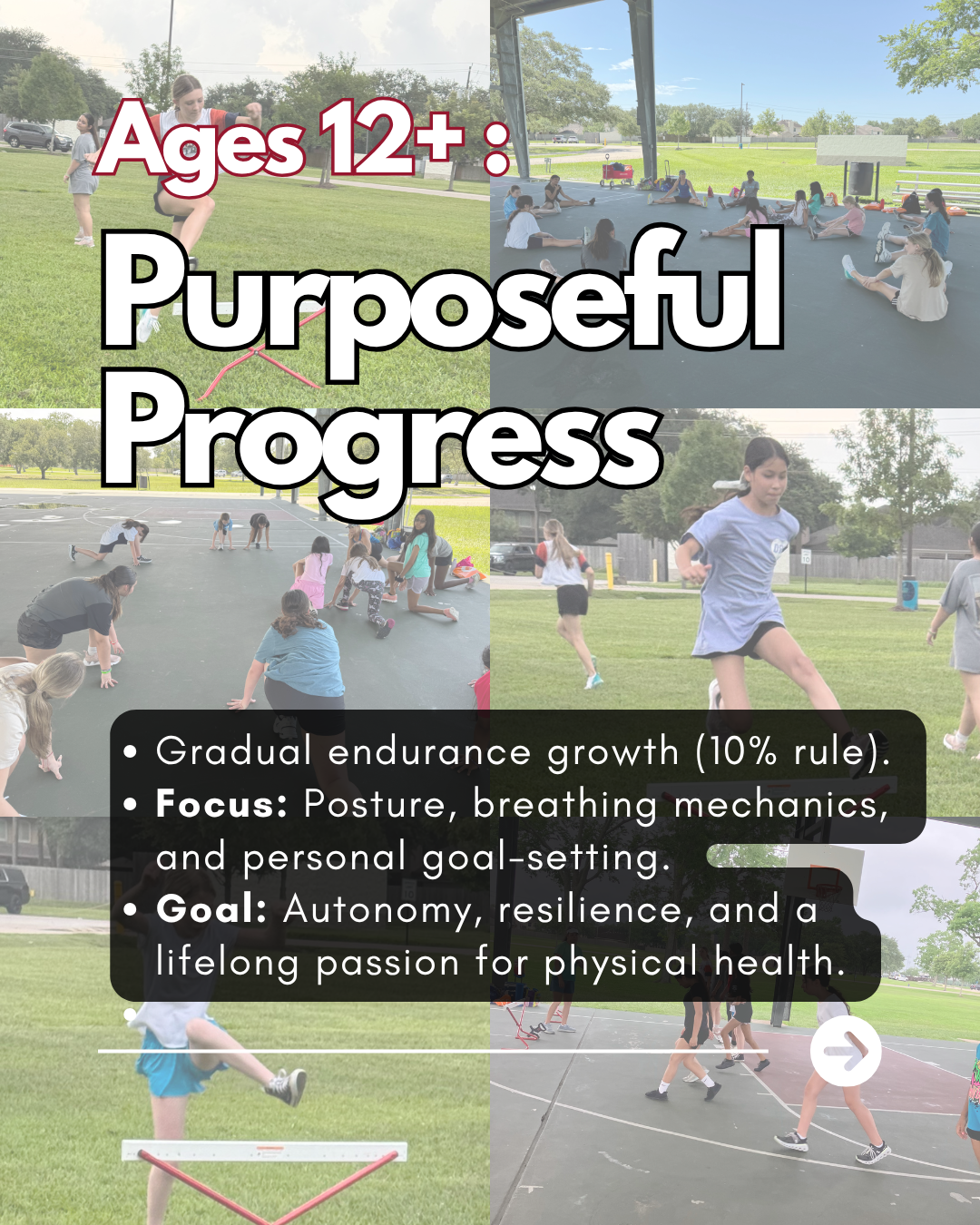
3. Ages 12+: Purposeful Progress & Personal Autonomy
As young athletes approach adolescence, they begin to develop intrinsic motivation and a desire to set personal goals. At this stage, running can become more structured, provided the athlete retains agency and ownership.
What it looks like: Gradual endurance growth using safe progression rules (such as increasing volume by no more than 10% per week), structured pacing games, and proper pre-run warm-ups and post-run cool-downs.
What to avoid: Rigid performance expectations, comparing athletes to their peers, or early sports specialization without rest periods.
The Goal: Fostering independence, emotional resilience, proper running mechanics, and sustainable habits for long-term health.
3 Quick Tips for Parents & Coaches
Praise Effort, Not Placement: Celebrate a child’s grit, positive attitude, and consistency rather than their finish place or speed.
Encourage Multi-Sport Play: Running builds the foundation for soccer, basketball, tennis, and swimming. Cross-training through play protects against repetitive stress injuries.
Listen When They Say "I'm Tired": Fatigue in young athletes is real. Rest days are when muscle repair and physical adaptation actually take place.
Building Lifelong Movement Together
When we remove the pressure of stopwatches and performance metrics, running becomes what it was always meant to be for children: an empowering, joyful outlet that lasts a lifetime.