Day 52: The Visualization Run
Two days ago we learned to control the breath. Yesterday we trained the mind and body to work simultaneously. Today we go one level deeper into the mind-body connection.
Today’s challenge is The Visualization Run, and it works in three distinct phases that together form one of the most powerful and most underused training tools in all of sport.
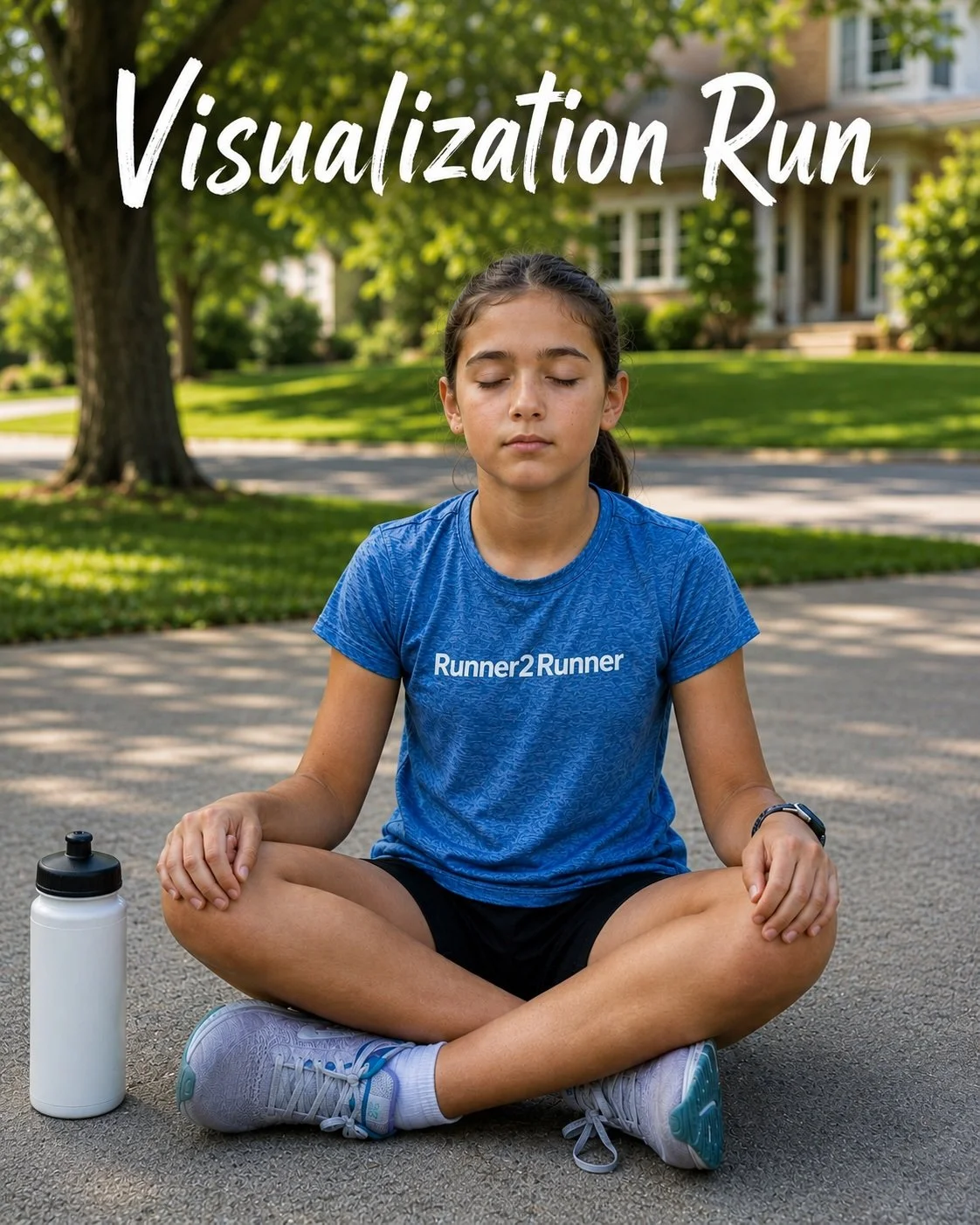
Before the run you visualize it. You close your eyes and mentally rehearse the route, the effort, the feeling of running it from start to finish. During the run you pay attention to how the actual experience compares to the visualization. After the run you debrief. What matched, what surprised you, what to adjust next time.
This three-phase structure is identical to the visualization practice used by Olympic sprinters before a race, by gymnasts before a routine, and by competitive distance runners before a hard effort. The only difference between their practice and today’s is the stakes. The method is exactly the same.
Why Visualization Works
Here is the neuroscience in the simplest possible form.
When you visualize a movement (when you imagine performing it with genuine detail and sensory specificity) the same neural pathways fire that fire when you actually perform it. The movement is not happening in the muscles, but the rehearsal is happening in the brain. The patterns being activated during visualization are the same patterns that will be called on during the actual performance.
This means that mental rehearsal is real rehearsal. It is not a supplement to physical training or a psychological trick. It is physical training happening at a neurological level. Elite athletes have known this through experience for decades. The neuroscience has confirmed it.
The practical effect is significant. Athletes who regularly visualize their performance before attempting it show measurably better execution, particularly under pressure, than athletes who prepare physically without the mental rehearsal component.
How to Visualize Effectively
Before the visualization session, three instructions worth following.
Find a quiet comfortable position. Sitting or lying down, eyes closed, body relaxed. The visualization is harder to access when the body is tense or distracted.
Use all the senses. The most effective visualizations are not just visual. They include the feeling of the ground under the feet, the sound of the breathing, the sensation of effort in the legs, the feeling of the air. The more sensory detail the visualization contains the more neural pathways it activates.
Visualize in real time. A 10-minute run should take roughly 10 minutes to visualize. Rushing through the visualization at double speed reduces its effectiveness significantly. Let it unfold at the pace of the actual run.
Today’s Workout: The Visualization Run
What you need: A comfortable quiet space for the visualization. Your running route, the same familiar route used in previous weeks is ideal because it is already stored in memory.
Total time: 30 to 40 minutes including visualization, run, and debrief.
Phase 1: The Visualization - Find a comfortable position, close the eyes, and take three slow deep breaths. Then begin. Visualize the full run from start to finish. Start at the front door or the start line of the route. Feel the ground under the feet as you begin. Feel the breathing settle into a rhythm. Notice the familiar turns and landmarks. Feel the legs moving. Notice the effort, where it feels easy, where it builds, where it requires focus. Visualize arriving at the halfway point, the moment of turning back, the feeling of the route becoming familiar from the other direction. Visualize the final stretch. Visualize crossing the finish line, slowing to a walk, the breathing calming. Take 3 to 5 minutes for the full visualization. When it is complete, open the eyes slowly and take one breath before standing.
Phase 2: The Run - Head out on the route. The instruction for this phase is simple: pay attention to how the run compares to the visualization. Notice what matches, the familiar turns, the effort on the uphill sections, the feeling of the breathing settling in. Notice what surprises, where the effort is different from what was visualized, where the terrain feels different from how it was remembered, where the experience diverges from the mental rehearsal. Run at a comfortable effort. This is not a time trial or a benchmark attempt, the focus is on the comparison between mental rehearsal and physical reality, not on performance. At the halfway point, pause for 30 seconds. Notice specifically how the effort compares to how you visualized feeling at this point. Run home.
Phase 3: The Debrief - After the run, before stretching, take 2 minutes to debrief as a family. Three questions. What in the run matched the visualization exactly? What surprised you, what was different from what you visualized? If you ran this route again tomorrow, what would you visualize differently? The debrief is not optional. It is the mechanism through which the visualization practice improves over time. The goal is not a perfect visualization on the first attempt, it is a progressively more accurate and detailed mental model of the run that improves with each cycle of visualize, run, debrief.
Cool-Down: Walk 2 minutes. Full stretch: hip flexors, hamstrings, calves. 20 seconds each. Use today’s breathing patterns from Day 50 during the stretch.
Age Modifications
🟢 Little Movers: Ages 3–5 | 15–18 Minutes - Skip the formal visualization and replace it with a story. Before the walk, tell them a story about the route, describe what you will see together, what sounds you might hear, one thing to look forward to. This is narrative visualization, building an anticipatory mental model of the experience before it happens. During the walk ask if things match the story. After the walk ask what was different from the story. The debrief for this age is one question: what surprised you on today’s walk?
🟡 Kid Movers: Ages 6–8 | 20–22 Minutes - A 2-minute guided visualization before the run, parent describes the route slowly while the child sits with eyes closed and tries to picture it. Keep the description concrete and sensory: the feel of the ground, the sound of the footsteps, the turn at the corner. Run the route at a walk-jog pace. Debrief with the three questions simplified: what did you remember right, what was different, what would you add?
🟠 Preteen Movers: Ages 9–12 | 25–28 Minutes - Full three-phase format as written with a 3-minute self-directed visualization. Challenge them to include at least three sensory details that are not visual (sound, physical sensation, breath) in their visualization. The non-visual sensory details are the hardest and most effective to include. Full debrief after the run.
🟣 Teen Movers: Ages 13+ | 28–32 Minutes - Full three-phase format with a 5-minute visualization. Add a specific performance intention to the visualization, not just what the run will feel like but how they will respond to the hardest moment. Visualize the point in the run where it becomes uncomfortable and visualize themselves continuing rather than slowing. This is called coping visualization and it is the most powerful application of mental rehearsal in sport. Full debrief with genuine reflection.
👨👩👧 Parent Bonus: Full three-phase format. Your specific addition to Phase 1: visualize not just your own run but your child’s. Visualize them moving well, breathing comfortably, reaching the finish. Then during the actual run pay attention to whether what you visualized about them matches what you observe. The debrief question for you: what did you notice about how your child actually ran compared to how you imagined them running?
Did You Know?
Mental rehearsal activates the same neural pathways as physical performance.
Research using functional MRI imaging has shown that when athletes visualize a movement (a sprint, a jump, a throw) the motor cortex activates in patterns nearly identical to those produced during actual execution of the movement. The muscles do not contract during visualization but the neural rehearsal is real and measurable. This neural rehearsal produces genuine performance improvements that accumulate alongside physical training.
Tomorrow is Day 53: Obstacle Mind Maze. See you at 6am.